
How to build a cancellation flow that actually saves subscribers and what to do when it doesn't
Casey Gannon
June 8, 2026
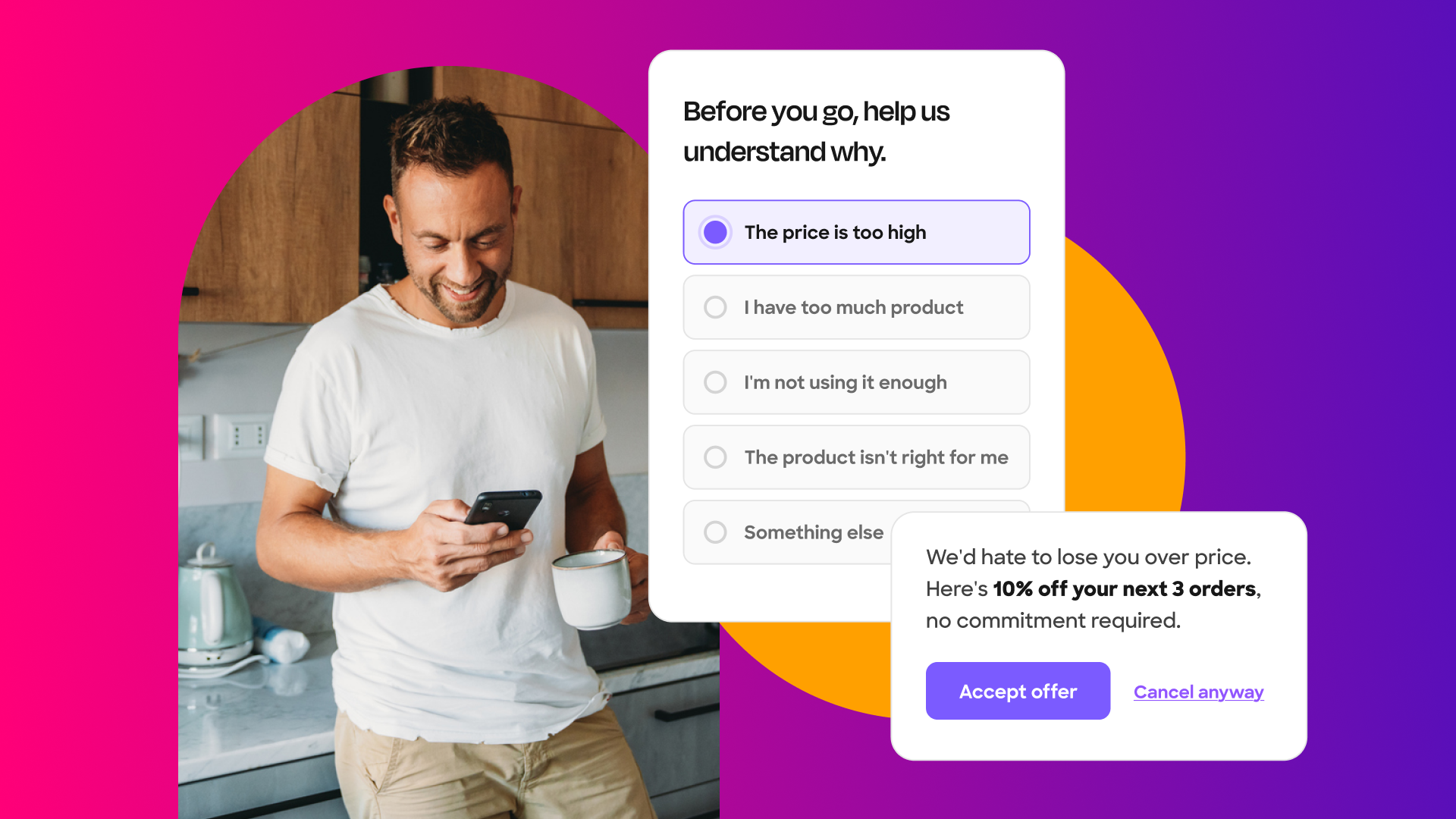
Every time a subscriber hits cancel, you're at a crossroads. You can let them go in one click and wonder why they left. Or you can design a structured moment that gives you a real chance to understand what went wrong and fix it before the relationship ends.
That's what a cancellation flow does. Not as a dark pattern or an obstacle course, but as a respectful conversation at the moment a subscriber is most honest with you.
Here's how to build one that works and what Bold Subscriptions gives you to do it.
What a cancellation flow actually is
A cancellation flow is the sequence a subscriber goes through when they try to cancel, before the cancellation completes. At minimum it asks why they're leaving. At its best it responds to that reason with a targeted offer that gives them a genuine reason to stay.
The difference between a basic flow and an effective one is whether the offer connects to the reason. A subscriber leaving because of price needs a discount, not a pause option. A subscriber leaving because they have too much product needs a frequency change, not a discount. When the offer matches the reason, save rates go up significantly. When it doesn't, subscribers feel like they're being stalled rather than helped.
Well-built cancellation flows save 20-40% of subscribers who initiate cancellation. That's not eliminating churn, it's recovering the subscribers who were on the fence.
Customer retention flow
Subscribers must select a cancellation reason before they can cancel. You define the reasons, and you configure a targeted response to each one. Bold handles the rest automatically.
This is the flow most merchants should be running. Here's how to configure it well.
5 cancellation flow scenarios and the right response for each
Scenario 1: "The price is too high" Response: Offer a targeted discount — a percentage off for the next two or three orders, not a permanent price cut. The goal is to bridge a temporary price sensitivity, not lock yourself into a lower rate forever. A 10-15% discount for a defined period gives the subscriber relief without training them to expect it every time.
Bold setup: Configure a discount offer to fire automatically when the subscriber selects this reason. No manual work required after setup.
Scenario 2: "I have too much product" Response: Offer a frequency change or an order delay. A subscriber who is stocked up doesn't want to cancel — they want breathing room. Giving them the option to skip their next order or push their billing date back six weeks addresses the actual problem without ending the subscription.
Bold setup: Offer a skip or frequency change directly from the retention flow. The subscription stays active, the billing adjusts, and the subscriber feels heard.
Scenario 3: "I'm not using it enough" Response: Offer a pause. Offer alternatives first — always present an option to pause subscription before finalizing a cancellation. A subscriber who isn't using the product isn't ready to re-engage right now. A pause keeps the relationship alive without forcing commitment. Make sure your pause option is for a fixed time, usually 3-6 months, otherwise you may never see those customers again.
Bold setup: Configure a pause option with a defined end date so the subscription resumes automatically.
Scenario 4: "The product isn't right for me" Response: Offer a swap. If you carry multiple product variants or flavours, a subscriber who chose wrong the first time might be a subscriber who chose right the second time. A product swap at the cancellation moment is a low-effort way to find out.
Bold setup: Enable a product swap option in the retention flow — the subscriber selects a different variant and the subscription continues unchanged.
Scenario 5: "Something else" Response: Collect the reason in a free-text field and route it to your team. Cancellation is when subscribers are most honest. Ask why they're leaving and listen. The feedback you gather directly informs product decisions and helps you spot patterns in what's driving churn. The subscribers who write something in the free-text field are often the ones with the most useful feedback — and sometimes the most winnable if a real person follows up.
Bold setup: Add a free-text "something else" reason and pull your Cancellation Reason report regularly to review customer feedback.
What not to do
Presenting too many retention options at once: a discount, a pause, a downgrade, and a free month will create decision paralysis. One targeted offer, chosen based on the cancellation reason selected, consistently outperforms a cluttered menu of alternatives.
Dark patterns frustrate users and damage brand trust. A cancellation flow should feel like a respectful conversation, not an obstacle course. Subscribers who feel manipulated rarely return.
The goal is a conversation, not a roadblock. If a subscriber selects a reason and your response genuinely helps them, they stay. If it doesn't help and they want to leave, let them go cleanly. The exit experience matters.
The cancellation reason is data, treat it like it
Every reason a subscriber selects is a signal. Price sensitivity patterns tell you whether your pricing needs adjustment. Frequency complaints tell you whether your default subscription cadence is right for your category. Product fit issues tell you whether your onboarding is setting the right expectations.
Over time, the reasons your subscribers give you at cancellation are more honest than anything you'll get from a survey. Use them.
You won't save every subscriber. Here's what happens to the rest.
A well-configured cancellation flow will save a meaningful percentage of subscribers who try to cancel. It won't save all of them. Some subscribers genuinely need to leave, life changes, budgets tighten, and product preferences shift.
The question is what happens to those subscribers next.
If you have rePete installed, the answer is: they don't disappear. When a subscriber cancels, Bold and rePete can automatically enroll them in AI-powered reorder nudges. When they're ready to buy again on their own terms, they get a well-timed reminder rather than silence. The subscription ended. The relationship doesn't have to.
Limit winback campaigns to a non-intrusive level. rePete handles the timing automatically by predicting the reorder window from existing purchase history and nudging at the right moment, not on a blunt email schedule. You can't stop all churn, but you can make sure every churned subscriber has a path back.
How to set it up in Bold Subscriptions
Cancellation flows are available now under Settings in Bold Subscriptions. Setup takes minutes:
- Navigate to Settings and enable the customer retention flow
- Define your cancellation reasons
- Configure a targeted retention response to each reason
- Bold handles every future cancellation attempt automatically
If you're not running a cancellation flow today, every subscriber who tries to cancel is leaving without a conversation. That's a retention opportunity — and a data collection opportunity — you're not taking.